Queue Management System in Saudi Arabia: A 2026 Guide to Faster Service
Long waiting lines quietly cost businesses money every single day. A modern queue management system in Saudi Arabia turns chaotic crowds into calm, orderly flow, and it does so while capturing data you can actually use. In 2026, retailers, clinics, banks, and government service centers across the Kingdom are treating queue technology as core infrastructure rather than a nice-to-have.
This guide explains how these systems work, what features matter, and how smart queuing pairs with drive-thru technology to lift throughput. Whether you run a single branch or a nationwide network, the fundamentals stay the same: reduce perceived wait, route people efficiently, and measure everything.
Why a Queue Management System Matters in 2026
Saudi Vision 2030 has pushed service quality to the front of nearly every sector. Customers now expect the same speed at a municipal counter that they get from a food app. When lines get long, satisfaction drops fast and staff burn out.
A well-designed queue platform solves this on three fronts. It cuts the actual wait, it lowers the perceived wait with clear signage and updates, and it gives managers real numbers instead of guesses. That combination is why adoption keeps climbing.
According to research published by the Nielsen Norman Group, perceived waiting time shapes satisfaction as strongly as the real duration. Good queuing design attacks both numbers at once.
The Hidden Cost of Unmanaged Lines
Unmanaged queues cause walkaways, negative reviews, and uneven staff workloads. One counter sits idle while another drowns. Multiply that across a busy week and the lost revenue becomes significant. A structured system spreads load evenly and keeps customers informed enough to stay.
Core Features of a Modern Queue Platform
Not every solution offers the same depth. When you evaluate vendors, look for the building blocks that actually move service metrics rather than flashy extras.
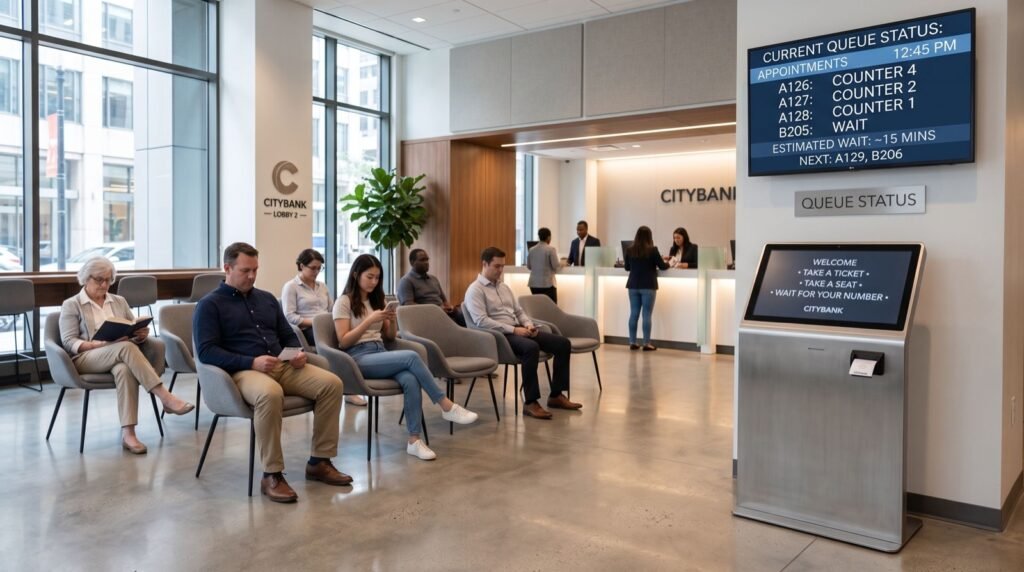
- Ticketing and mobile check-in: Printed tickets, QR codes, or app-based virtual queues so people wait wherever they like.
- Digital signage: Screens that call the next number and display estimated wait times clearly.
- Multi-service routing: Sending customers to the right counter based on their reason for visiting.
- Live dashboards: Real-time views of queue length, average service time, and staff performance.
- Appointment integration: Blending pre-booked slots with walk-ins so neither group blocks the other.
- SMS and app alerts: Notifying people to return just before their turn.
Businesses that want a fully supported deployment often work with specialists who handle the full stack. A trusted provider of a queue management system in saudi arabia can integrate hardware, software, and signage into one coordinated setup rather than leaving you to stitch pieces together.
How Queue Management Pairs With Drive-Thru Systems
Queuing is not limited to indoor counters. Quick-service restaurants, pharmacies, and banks increasingly rely on lane-based ordering, and the same principles apply outdoors. Order accuracy, timing, and clear communication decide whether a lane flows or jams.
Modern Drive-thru Systems in Saudi Arabia combine headset audio, order-confirmation screens, and lane timers so teams know exactly where every vehicle sits in the process. When paired with indoor queue analytics, managers get a single view of demand across both channels.
What Makes a Drive-Thru Lane Fast?
Speed comes from removing friction at each step. Clear menu boards reduce hesitation. Confirmation screens cut errors that trigger costly redos. Lane timers pinpoint the exact station causing delays, so you fix the bottleneck instead of blaming the whole team.
Comparing Queue Setups by Business Type
The right configuration depends on your environment. The table below maps common setups to the sectors that benefit most.
| Business Type | Recommended Setup | Primary Benefit |
|---|---|---|
| Retail store | Mobile check-in + digital signage | Shoppers browse instead of standing in line |
| Bank branch | Multi-service routing + dashboards | Correct counter routing, shorter waits |
| Clinic | Appointment + walk-in blending | Balanced patient flow all day |
| Restaurant | Drive-thru timers + order screens | Higher lane throughput, fewer errors |
| Government center | Ticketing + SMS alerts | Reduced crowding in waiting halls |
Steps to Roll Out Queue Management Successfully
A smooth deployment follows a clear order. Rushing hardware installation before mapping your service flow usually creates rework. Follow this sequence instead.
- Map your journeys: List every reason a customer visits and the counter that handles it.
- Choose the channels: Decide between printed tickets, QR check-in, or a virtual mobile queue.
- Install signage: Place screens where waiting people can see them without straining.
- Train staff: Make sure counter teams understand routing and dashboard alerts.
- Measure and refine: Watch the analytics for two weeks, then adjust staffing to demand peaks.
One practical tip from real deployments: schedule staff around your busiest 90-minute window rather than around opening hours. Peak-hour coverage delivers the biggest visible improvement in wait times.
When you compare local installers and support teams, look for genuinely dependable specialists who provide training and post-launch tuning, not just a box of equipment.
Measuring the Return on Queue Technology
The strongest reason to invest is the data. Once your system runs, you can track average wait, service time per staff member, abandonment rate, and hourly demand. These numbers turn scheduling from guesswork into strategy.
Over a full quarter, most businesses see shorter waits, steadier staff workloads, and higher review scores. Those gains compound because satisfied customers return more often and recommend you to others.
Frequently Asked Questions
How much does a queue management system in Saudi Arabia cost?
Pricing depends on the number of branches, counters, and screens plus the software tier you choose. A single-branch setup is affordable, while multi-site networks scale up. Most providers offer modular packages so you pay only for the features you actually use.
Can a queue system integrate with drive-thru lanes?
Yes. Many platforms unify indoor queuing and drive-thru timing under one dashboard. This gives managers a complete demand picture and helps them shift staff between counters and lanes as traffic changes throughout the day.
Do customers need to download an app?
Not necessarily. Modern systems support QR check-in through a browser, printed tickets, and SMS alerts. An app is optional. The goal is to let each customer choose the method that suits them without forcing a download.
How long does installation take?
A standard single-branch deployment usually takes a few days once hardware arrives and service journeys are mapped. Larger rollouts across many locations run in phases, starting with a pilot branch to validate the configuration before scaling.
Conclusion
A modern queue management system in Saudi Arabia delivers faster service, calmer waiting areas, and the data you need to keep improving. Paired with smart drive-thru technology, it lifts throughput across every channel your customers use. If long lines are costing you loyalty, now is the time to fix the flow. Explore a professionally supported queue and drive-thru setup, and start turning waiting time into a competitive advantage in 2026.